
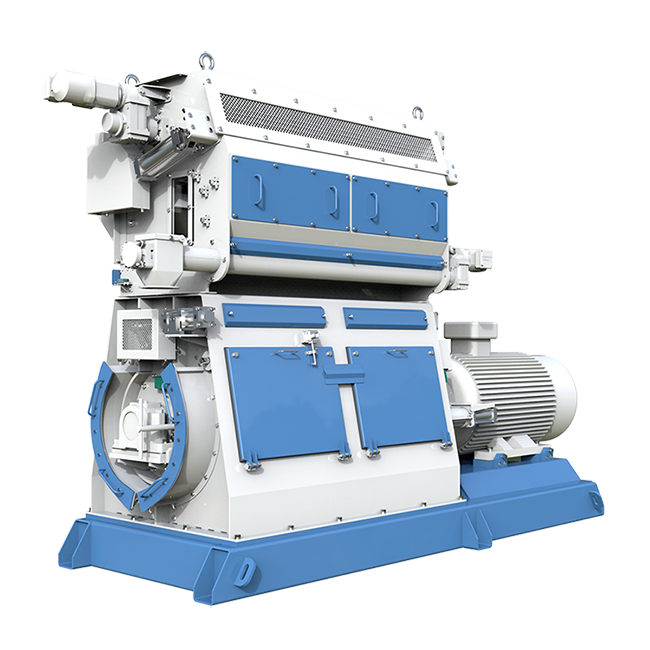
Roller Grinder Machines: How They Work and Where They Are Used
Processing efficiency for feed production relies on the mechanical action applied to raw ingredients to achieve specific particle sizes. Roller grinder machines function by passing material through a defined gap between two rotating cylinders, which break the grain to expose the endosperm. FAMSUN develops these systems to provide precise particle reduction, ensuring that the processed feed meets the varied requirements of modern animal nutrition programs.
Mechanical Principles of Roller Grinding
The primary mechanism of the roller grinder involves the adjustment of the roll gap and the application of specific corrugation patterns on the surface of the rollers. A tighter gap results in finer particles, while a wider gap produces a coarser texture. The corrugation patterns—such as the number of grooves per inch and the cut angle—determine the shear and compression forces applied to the material. These variables allow operators to adjust the machine performance based on the hardness and physical properties of the incoming grain.
When comparing different equipment technologies, the milling action of a roller system stands out for its ability to produce a uniform particle distribution with minimal fines. This makes them highly effective for preparing ingredients that require specific physical characteristics to optimize digestion. FAMSUN integrates these features to support high-throughput environments where consistency is the primary goal for facility managers.
Applications in Ruminant and High-Starch Rations
In the context of ruminant diets, the ability to control the degree of grinding is essential for regulating digestion speed. For high-starch rations, achieving a moderate particle size is often necessary to balance rapid energy release with rumen health. Unlike a vertical grinding mill, which might be used for fine-pulverizing, roller grinders are often preferred when the objective is to crack grains without generating excessive dust or waste. This specialized approach ensures that the energy density of the ration remains intact throughout the processing chain.
Roller grinder machines serve as a reliable solution for milling grinding in feed production lines that require precise control over material texture. By adjusting mechanical parameters like roll gaps and corrugation, producers are able to meet the specific nutritional demands of various animal species. This approach supports efficient energy usage and maintains high output standards, providing a stable foundation for consistent feed quality in commercial operations.