
Automotive Molded Rubber Parts: Why Process Stability Matters
The automotive portfolio extends from small precision seals to corner joints, bushings, and glass-encapsulation edges, with each part imposing a different material and handling route. Each part may use a different compound, mold, and handling method. For these programs, rubber injection molding for automotive industry production needs process controls tailored to the relevant product rather than one universal recipe.
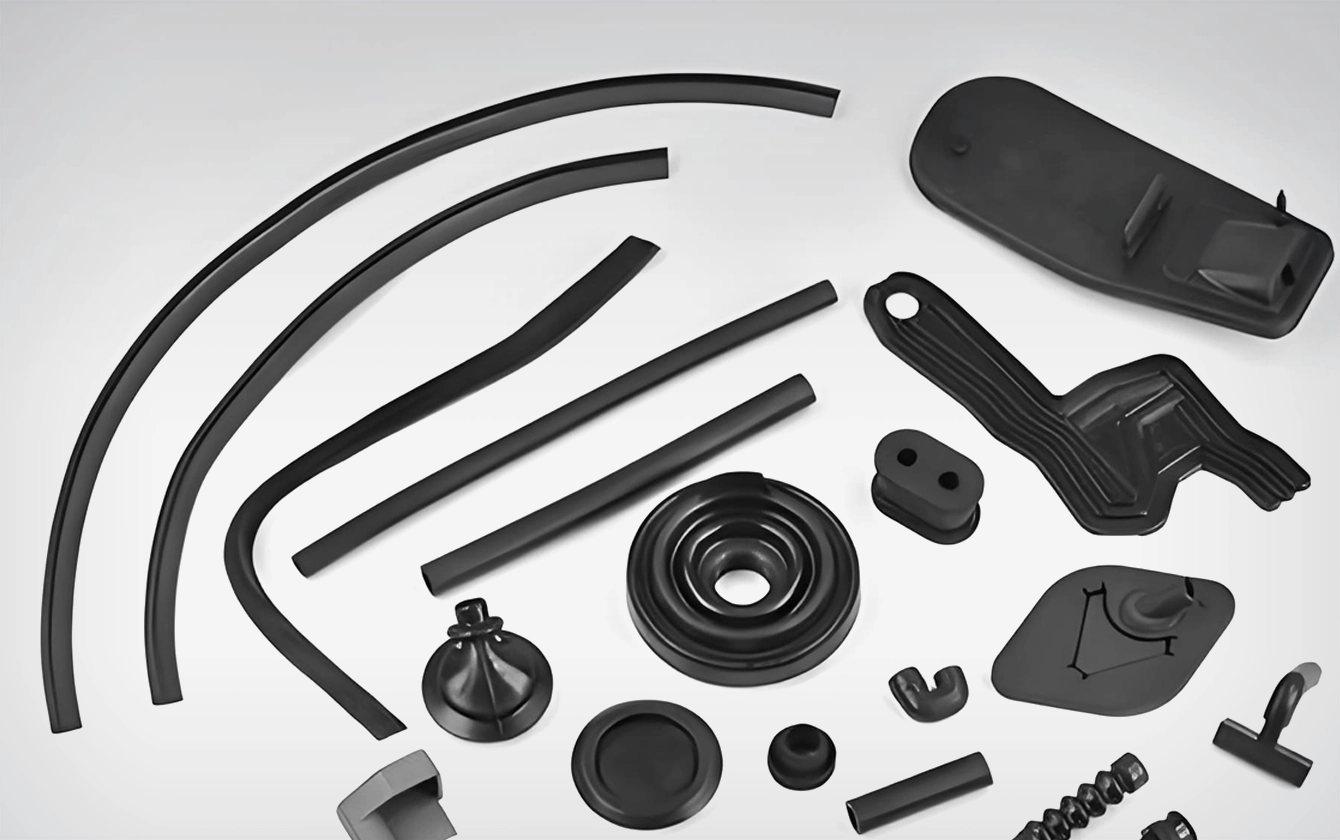
Automotive molded rubber parts must remain consistent across long production runs and changing material lots. Dimensional accuracy, flash, filling, surface quality, bonding, and insert position can all be affected by the machine, mold, compound, or handling system. Traceable evidence is needed to separate those causes.
Part families require different machine layouts
General vertical machines suit many molded rubber components. Servo-hydraulic platforms may support TPV, TPE, and flexible modified PVC. C-frame systems provide open access for sealing-strip joints and inserted parts, while dedicated machines address glass encapsulation and precision sealing rings.
Dekuma matches RV, RV-Se, RC, and glass-encapsulation equipment to the molding task instead of presenting the automotive range as one standard cell. For sealing-ring projects, the separate RH Series should be assessed against the exact product and compound rather than treated as a general automotive platform. Their injection paths, clamping structures, access, controls, and options differ. Feature selection should remain tied to the machine proposed for the actual component.
Shot size, injection pressure, mold area, platen dimensions, opening stroke, and removal space should be evaluated together. The fastest or largest machine may not offer an appropriate production fit if changeovers, tooling access, or material residence become more difficult.
Automation layout should follow the complete part flow. Profile or insert loading, mold closing, injection, cure or cooling, opening, removal, cleaning, inspection, and transfer all consume time and create possible variation.
Material condition establishes repeatable flow
Depending on function, automotive molded rubber parts may use natural rubber, NBR, EPDM, butyl rubber, TPV, TPE, or other approved compounds. Storage, preparation, temperature, viscosity, and batch identity influence how each material fills and sets.
Plasticizing and injection should create a consistent shot without excessive residence time. FIFO paths, separate thermal zones, or servo response may support particular platforms. These features should not replace defined material-change and cleaning procedures.
Injection speed and pressure need validation through cavity filling, part weight, dimensions, and surface results. Excessive force can create flash or mold stress. Insufficient filling can leave short sections, weak joints, or incomplete edges.
Starts, stops, and compound changes deserve first-off approval. Material left in the system may have a different thermal history. Production should resume only after the active recipe, mold, material, and sample results have been confirmed.
Mold and handling controls protect quality
Rubber injection molding for automotive industry work often includes inserts or profiles that must be positioned before closing. Sensors, locating fixtures, and low-pressure mold protection reduce the risk of damage from missing, shifted, or duplicated components.
Even clamping and correct mold temperature influence flash and cure. Mold surfaces, vents, gates, heaters, cooling circuits, and guides need scheduled care. Regional defects may identify a local tooling issue that a machine-wide adjustment would not solve.
Robots and ejectors should support warm, flexible parts without stretching or marking them. End-effector design, removal timing, and transfer support can affect dimensions after the press opens. Handling trials should continue through inspection and packing.
Automated inspection may check dimensions, flash, surface condition, or insert presence. The method requires known defect samples and periodic verification. Rejection protects downstream assembly, but recurring failures still need root-cause analysis.
Measurement capability should be established for every critical characteristic. Gauge fixtures, cameras, lighting, and reference samples need controlled setup so changes in the inspection station are not mistaken for molding variation.
Cavity-level records can show whether a defect follows one gate, vent, insert location, or heating zone. Time-based samples can reveal warm-up effects and gradual drift. Both views are more informative than a combined batch average.
After a mold or material change, a defined first-off sequence should confirm weight, dimensions, surfaces, bonding, and insert position. This release keeps setup output separate from normal production.
Capacity studies should include preparation, molding, cooling or cure, removal, inspection, packing, and changeover. Accepted parts per available hour provide a stronger measure than the shortest machine cycle.
Data and maintenance preserve the baseline
Dekuma’s iSee platform can monitor machine status, production data, workflow, quality information, and traceability on applicable systems. Records should link part, cavity, compound lot, mold, recipe, alarms, and inspection so trends carry production context.
Stable rubber injection molding for automotive industry production should be reviewed by part family rather than across one combined average. Measurements for automotive molded rubber parts must reflect their specific sealing, bonding, dimensional, or vibration-control function. This separation prevents a strong result from one product group from hiding drift in another and makes corrective ownership clearer.
Preventive maintenance must coordinate the press, injection unit, temperatures, hydraulics, sensors, robots, and molds. Changes in cycle time, pressure response, energy use, or alarm frequency can provide early evidence of wear or altered conditions.
For automotive molded rubber parts, repeatability is demonstrated when material records, mold condition, machine data, handling, and inspection point to the same controlled process. Preserving that relationship through recipes and change control supports consistent supply.
Maintenance and traceability also support safer process improvement. Periodic reviews should compare field feedback, internal defects, downtime, and approved engineering changes so short-term cycle gains do not obscure long-term component performance.