How Air Suspension and Anti-Roll Systems Improve Coach Ride Stability
A scenic journey can lose its appeal when passengers are repeatedly jolted by uneven pavement or pushed sideways through bends. Ride comfort depends on more than seat cushioning: suspension geometry, air pressure control, damping, and body-roll management all influence how a vehicle responds to changing road conditions.
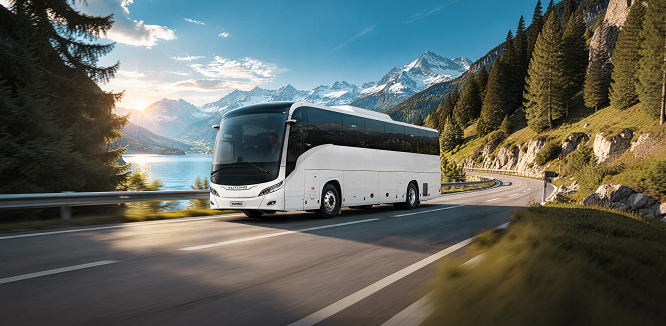
For a luxury tourist coach bus, these systems must balance passenger comfort with predictable handling, particularly on winding roads and long-distance routes. Yutong Bus provides a useful reference for examining how vehicle engineering can support a smoother travel experience without overlooking stability and durability.
How Independent Air Suspension Responds to Road Conditions
Air suspension uses flexible air springs to support the vehicle body. Compressed air inside each spring provides a cushioning effect, while the system’s operating pressure changes according to load and control requirements. Compared with a conventional steel-spring arrangement, air suspension can offer greater flexibility in maintaining ride height as passenger numbers and luggage loads vary.
Independent suspension allows a wheel to respond to road irregularities with less direct influence on the wheel opposite it than a rigidly connected arrangement. This can help the vehicle maintain tyre contact over uneven surfaces and reduce the transmission of certain disturbances into the cabin. Actual performance depends on suspension geometry, damper characteristics, tyre properties, and the vehicle’s overall design.
Electronic height control can add another layer of adaptability. Sensors monitor ride height, while control valves adjust the air supply to compensate for changes in load or vehicle position. Maintaining an appropriate ride height supports consistent suspension geometry and ground clearance, although system limits and manufacturer specifications determine how the vehicle responds in different operating conditions.
Understanding Anti-Roll Stabilization During Cornering
Body roll occurs when lateral acceleration shifts the vehicle body outward relative to a turn. The suspension compresses more on one side and extends on the other, creating a noticeable tilt that can affect passenger comfort. The amount of roll depends on factors such as centre-of-gravity height, track width, spring rates, and the speed and radius of the turn.
Anti-roll bars connect suspension components across the vehicle and resist unequal wheel travel between the two sides between the two sides. During cornering, the bar develops a resisting torque that helps limit body lean. Its stiffness must be selected carefully: excessive roll resistance can compromise ride comfort over uneven surfaces, while insufficient resistance may allow more body movement than desired.
Electronic stability systems serve a related but different purpose. By monitoring vehicle motion and driver inputs, they can intervene through selective braking or powertrain control when the vehicle begins to deviate from its intended path. Such systems do not replace sound suspension design or appropriate driving speed; instead, they provide another layer of control when road conditions or manoeuvres challenge vehicle stability.
Balancing Comfort With Passenger and Vehicle Loads
Passenger numbers and luggage distribution influence suspension behaviour. Additional mass changes spring compression, axle loading, and the forces acting on the vehicle during braking and cornering. Air suspension with automatic levelling can help maintain ride height within its operating range, but it cannot compensate for excessive loads or improper weight distribution.
The relationship between damping and spring response is equally important. Springs absorb and store energy as the wheels move, while dampers dissipate that energy to limit repeated bouncing. If damping is too weak, the body may continue oscillating after a bump; if it is too firm, sharp road impacts can become more noticeable. Engineers tune these elements together to achieve an appropriate compromise between ride isolation and control.
Seat design and cabin layout also shape the passenger’s perception of comfort. Supportive seating can reduce local pressure and help travellers maintain a relaxed posture, while suitable handholds and clear circulation areas improve comfort during boarding and movement. A well-engineered luxury tourist coach bus treats suspension, seating, and interior ergonomics as complementary parts of the journey rather than isolated features.
Assessing Long-Term Performance and Maintenance
Air suspension relies on components that require inspection over time, including air springs, pipes, valves, sensors, and compressors. Leaks or worn components may cause uneven ride height, excessive compressor operation, or reduced suspension performance. Routine checks help identify developing faults before they create larger operational disruptions.
Anti-roll components also need attention. Worn bushes, damaged links, loose fasteners, or deteriorated dampers can change the way the vehicle responds in corners and over uneven roads. A maintenance programme should combine visual inspections with investigation of driver reports, especially if a coach begins to lean more than usual, bounce repeatedly, or produce unfamiliar suspension noises.
The supplied information for Yutong’s T12E describes a long-life design target of 15 years or 1.5 million kilometres for its core electric systems and management system. This figure concerns electric-system longevity rather than the service life of air suspension or anti-roll components. Suspension durability requires its own specifications, inspection history, and maintenance evidence, so the two engineering claims should be evaluated separately.
Conclusion
Passenger comfort and vehicle stability emerge from the interaction of suspension architecture, damping, roll resistance, load distribution, and electronic controls. Air suspension can help manage ride height and absorb road disturbances, while anti-roll systems limit excessive body lean during cornering; neither works independently of the rest of the chassis.
Yutong Bus offers a context for considering these connected design priorities, but fleet operators should assess the actual suspension configuration and maintenance requirements of each vehicle. A well-engineered luxury tourist coach bus supports a more composed journey when comfort, handling, and long-term service needs are evaluated together.