
Powering the STM32H743VIT6: Voltage Regulation, Assembly Considerations, and Choosing an MCU Supplier
Embedded hardware systems rely on stable power rails and clean signal routing to guarantee uninterrupted operation. Digital processors require steady voltage steps to prevent logic degradation, unexpected resets, or communication dropouts during industrial field deployment.
System architects selecting the STM32H743VIT6 must address power delivery architectures long before finalizing prototype layouts. Managing current demands and power conversion across sensitive digital circuitry dictates overall system dependability in challenging operating environments.
Deploying sensitive microcontrollers alongside switching regulators creates distinct engineering challenges regarding board layout, component placement, and thermal dispersion. Sourcing those critical components through verified channels remains equally pivotal for long-term manufacturing success.
Step-Down Voltage Regulation and Core Power Stability
Digital control circuits demand stable intermediate rails to isolate core logic from fluctuations across raw industrial supply inputs. Efficient step-down voltage conversion prevents power losses from accumulating as ambient temperatures rise across sealed hardware enclosures.
Buck switching regulators fulfill this function by converting higher rail voltages down to adjustable operating levels. Selecting dedicated power management integrated circuits ensures consistent power delivery while maintaining high conversion efficiency across dynamic operational cycles.
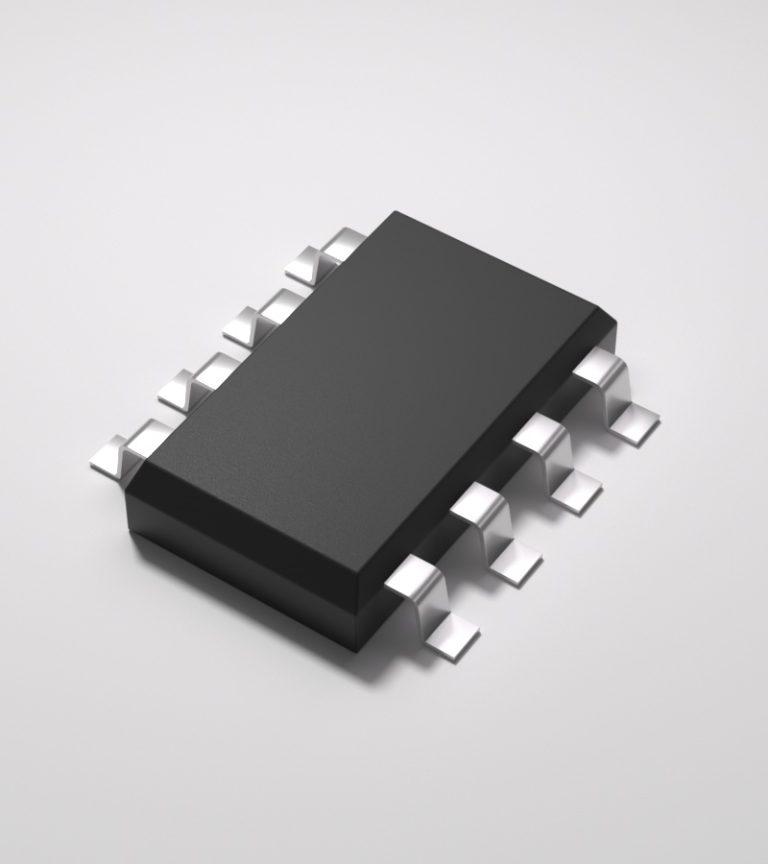
Hardware teams integrating the STM32H743VIT6 often implement dedicated step-down devices like the TI TDA22590 to manage primary power drops. Engineered as a buck switching regulator IC, the TDA22590 provides efficient step-down regulation and reliable power delivery for systems requiring adjustable low-voltage conversion.
Delivering up to 3A of adjustable output current, this regulator supplies sufficient current headroom for digital processing blocks and auxiliary peripherals. Maintaining stable current capacity protects sensitive digital architectures against transient dips caused by simultaneous peripheral switching.
Adjustable output capability allows hardware engineers to fine-tune supply rails according to precise subsystem voltage tolerances. Supplying consistent current without excessive heat generation ensures steady voltage rails for both core processing and mixed-signal peripheral stages.
Packaging Geometry, Thermal Limits, and Board Assembly
Physical enclosure constraints often dictate component selection across modern embedded applications. Dense layout configurations require compact power management silicon that balances footprint economy with effective thermal conduction during prolonged operating periods.
Packaging specifications directly influence automated manufacturing efficiency and surface-mount yields. The TDA22590 is housed in an 8-pin SOIC package with a 3.90mm width, making it well-suited for space-constrained PCB layouts and automated assembly processes.
High-density printed circuit layouts benefit from standard SOIC outlines that facilitate clean copper routing between adjacent traces. Standardized mechanical profiles simplify surface-mount pick-and-place programming and enable consistent visual inspection after solder reflow.
Operating temperature ratings represent another essential boundary during component selection. Rated for an operating temperature range from -40 ℃ to +150 ℃, the TDA22590 tolerates severe industrial heat profiles and extreme temperature swings without losing regulation accuracy.
Volume production runs also depend on standardized delivery packaging to maintain steady manufacturing cadence. Supplying components in standard packages of 2500 units per reel ensures continuous feeder loading across high-speed surface-mount placement lines.
Traceability Standards and Component Verification Methods
Procuring microcontrollers and power management chips requires rigorous supplier vetting to eliminate counterfeit exposure. Sourcing through an unverified MCU supplier creates operational vulnerabilities, ranging from substandard silicon revisions to out-of-spec electrical behavior.
Traceable supply networks provide the only reliable defense against remarking, unauthorized reclamation, and substandard handling practices. Unibetter sources and procures electronic components from franchised sources to guarantee 100% authentic, quality-assured and brand-new electronic components.
Quality verification frameworks protect manufacturing schedules through documented testing protocols. Comprehensive inspection routines include visual inspection, X-ray testing, decapsulation testing, solderability testing, and electrical testing to confirm physical integrity before parts reach customer assembly facilities.
UniBetter’s CSD quality management system includes a three-level incoming inspection process. Its quality procedures are designed to support component verification and quality control.
Certified laboratory facilities reinforce component authenticity through standardized testing procedures. Independent laboratory endorsements, such as CNAS-certified testing facilities comparable to ISO/IEC 17025, assure that incoming shipments undergo rigorous validation against original factory specifications.
Maintaining compliance with recognized quality standards like AS9120, ISO 9001, and ANSI/ESD S20.20 ensures protective handling from intake to final packaging. Secure electrostatic discharge precautions and climate-controlled storage prevent latent semiconductor damage prior to circuit assembly.
Procurement Channels and Strategic Inventory Management
Fluctuating market availability frequently challenges production planners managing complex bills of materials. Partnering with an established MCU supplier helps hardware enterprises forecast allocation shifts, resolve component shortages, and avoid costly production downtime.
Global Sourcing Networks and Rapid Component Fulfillment
Extensive supplier connectivity allows procurement specialists to locate active stock across international distribution channels. Unibetter distributes a wide range of electronic components across industrial automation, automotive electronics, electric power, and telecommunications sectors.
Decades of market presence strengthen supply resilience during tight allocation cycles. Backed by sixteen years of industry experience and over fifty global sourcing experts, procurement networks leverage relationships with more than 7,000 trusted suppliers worldwide.
Rapid quotation turnaround accelerates purchasing decisions during critical sourcing windows. Access to vast distributor networks enables teams to receive comprehensive bill-of-materials quotes within two hours, expediting procurement approvals and production scheduling.
Global fulfillment capabilities bridge regional inventory gaps through flexible shipping options. Holding thousands of in-stock lines facilitates same-day dispatch, while broad distributor access enables delivery of global inventory within three to seven days.
Strategic Inventory Planning and Procurement Cost Optimization
Cost optimization remains an essential metric for purchasing departments balancing tight manufacturing budgets. Unibetter supports customers to locate needed electronic components and acquire them at lower costs, safeguarding margins without compromising component integrity.
Aligning dependable voltage regulation with disciplined component procurement creates a foundation for resilient electronic hardware. Validating technical parameters alongside certified supply channels ensures that embedded systems achieve operational longevity from prototype development through volume delivery.